What Is Soft Washing? A Jacksonville FL Homeowner’s Plain-English Guide
Quick Overview — The 30-Second Answer
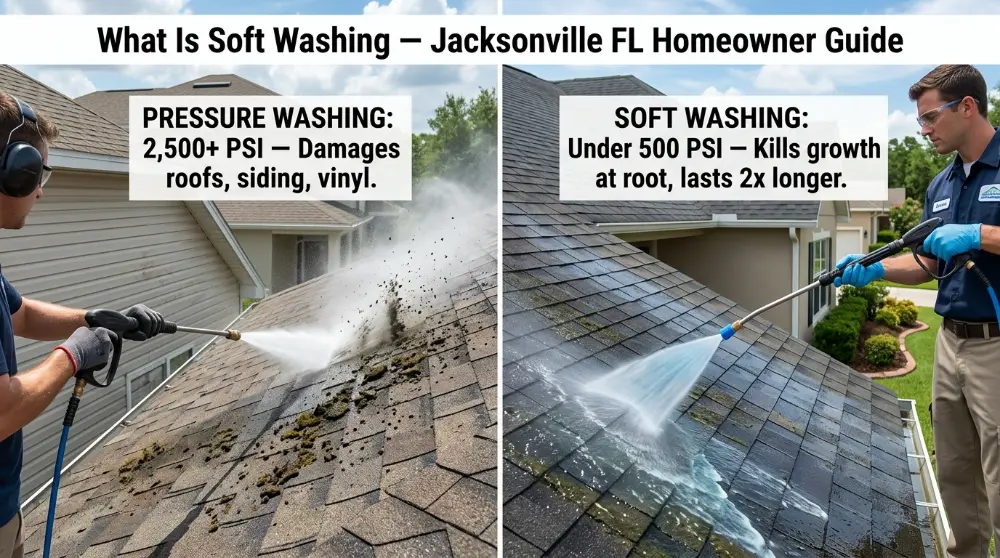
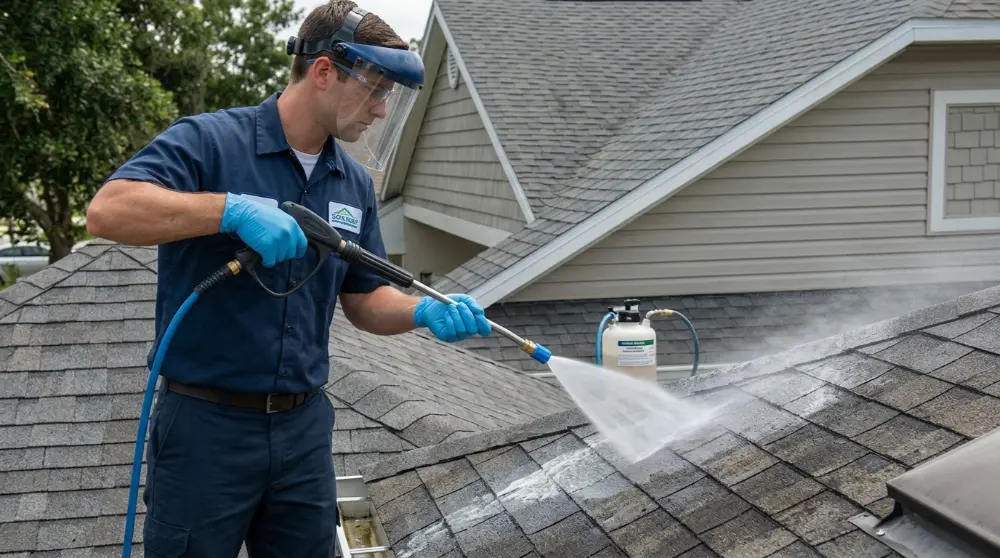
Soft washing is a low-pressure exterior cleaning method that uses biodegradable chemical solutions — primarily sodium hypochlorite with surfactant — to kill biological growth at the cellular root rather than just washing it off the surface. Applied at under 500 PSI (similar to a garden hose), soft washing vs pressure washing cleans surfaces without the mechanical damage that high-pressure washing causes on roofs, siding, stucco, wood, and other surfaces. In Jacksonville FL’s humid climate, soft washing is the appropriate method for most exterior surfaces — producing results that last 12–24 months versus 3–6 months after standard pressure washing.
The Problem Soft Washing Solves
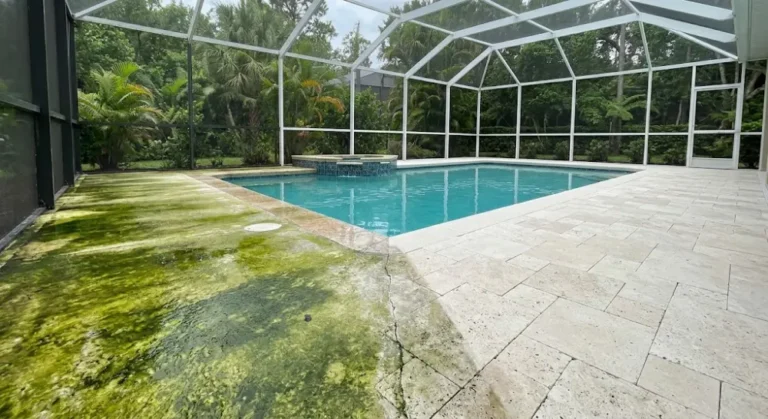
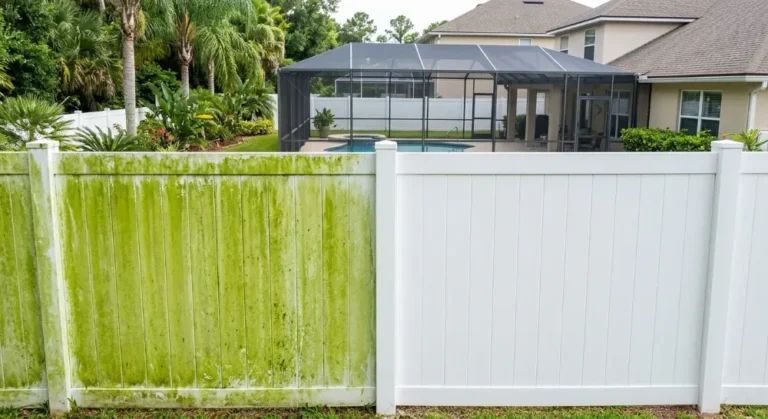
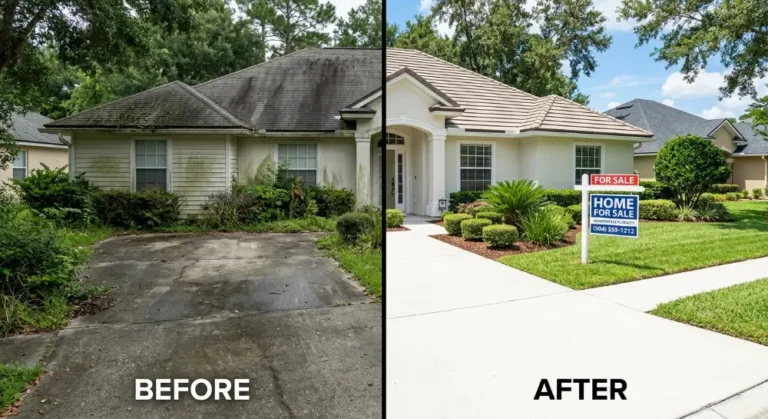
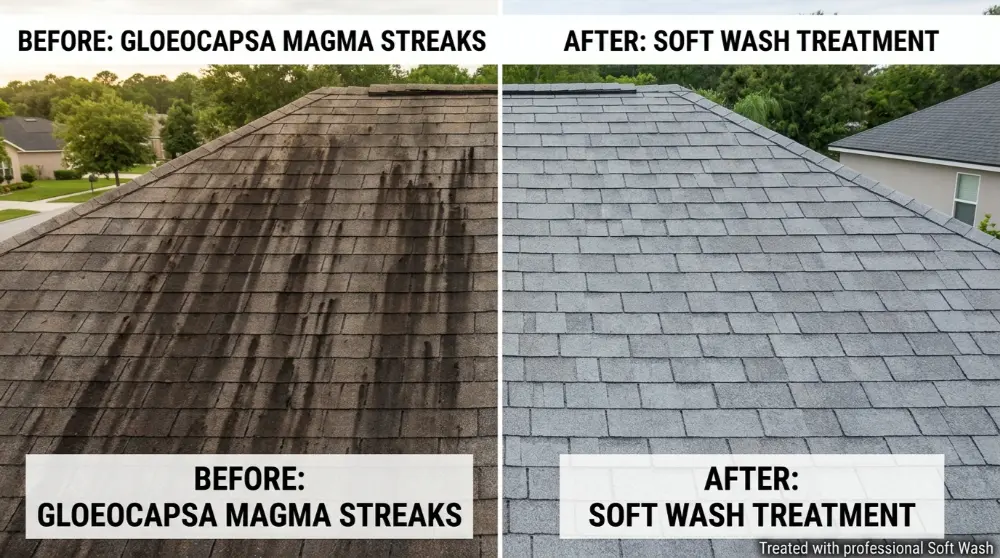
The green, black, and grey staining on Jacksonville exteriors is not dirt — it’s living organisms. Gloeocapsa magma is a cyanobacteria that produces dark brown to black colonies on roofs and siding, metabolizes limestone filler in asphalt shingles, and spreads via airborne spores — those are the dark streaks on Jacksonville roofs. Algae colonizes virtually every exterior surface in Jacksonville’s humid environment. Mold and mildew establish on shaded, moisture-retaining surfaces year-round.
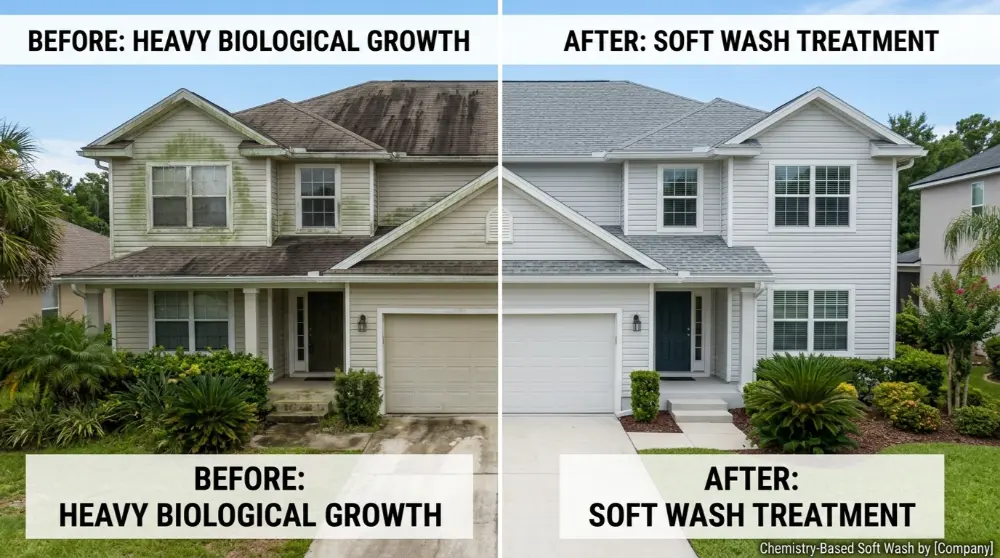
High-pressure washing blasts what’s visible off the surface but leaves the biological root intact. Within weeks to months, the organism regrows from that intact root. Soft washing’s sodium hypochlorite penetrates at chemistry level and kills the organism at the cellular root — without a living root system to regrow from, the surface stays clean dramatically longer.
How Soft Washing Works — Step by Step
- Surface assessment: Identify surface types, note sensitive areas, determine appropriate SHC concentration
- Landscaping pre-wet: All plants within 8–10 feet of treatment areas thoroughly wetted with clean water
- Solution preparation: Sodium hypochlorite mixed at appropriate working concentration for the surface type
- Surfactant addition: Soap-like agent helps solution cling to vertical surfaces rather than sheeting off before adequate dwell time
- Low-pressure application: Under 500 PSI — no mechanical force significant enough to damage any exterior surface
- Dwell time: 10–30 minutes — surfaces visibly lighten as organisms die and their pigmentation breaks down
- Low-pressure rinse: Removes dead biological material and residual chemistry
- Post-rinse plant care: All landscaping rinsed again to neutralize any chemistry contact
Soft Wash Chemistry: What It Is and Why It Works
Sodium hypochlorite (SHC): The active ingredient in soft wash solutions — the same base compound as household bleach but at precisely calibrated concentrations with surfactant. SHC kills biological organisms by disrupting cellular membrane function. Different surfaces require different concentrations: asphalt shingle roofs (3–6% working concentration), vinyl siding (2–4%), stucco (2–3%), concrete (up to 6% for heavy growth).
Surfactant: Reduces surface tension, helping SHC solution cling to vertical surfaces. Also helps lift dead biological material during rinsing.
Soft Washing vs Pressure Washing: When to Use Each
| Surface | Method | Why |
|---|---|---|
| Asphalt shingle roof | Soft wash only | ARMA-prohibited pressure washing; granule damage |
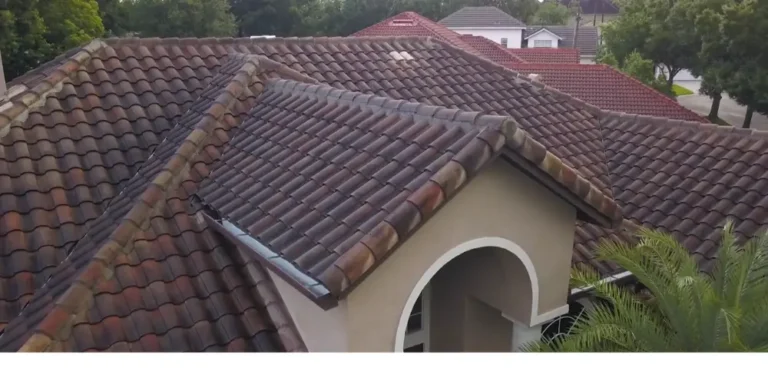
| Tile roof | Soft wash only | Cracking risk; mortar joint erosion |
| Vinyl siding | Soft wash | Water intrusion behind panels at high pressure |
| Hardie board / fiber cement | Soft wash | Paint damage and substrate exposure |
| Stucco | Soft wash | Cracking, pitting, and water intrusion risk |
| Historic brick or coquina | Soft wash only | Fragile; irreversible pressure damage to mortar |
| Concrete driveway cleaning | Pressure wash | Dense, tolerates force; tannin pre-treatment needed |
| Wood deck | Soft wash + low pressure | Grain raising and fiber damage at high pressure |
| Vinyl fence cleaning | Soft wash | Panel cracking and seam forcing at high pressure |
| Pool deck (travertine) | pH-neutral soft wash | Acid etching risk from standard chemistry |
FAQ — Soft Washing Jacksonville FL
Q: Is soft washing safe for my dog and children?
A: Once the treated surface is rinsed and dry — typically 30–60 minutes after completion — it’s safe for pets and children. Keep animals and children clear of active treatment areas during application and rinsing.
Q: Will soft washing bleach my colored siding?
A: At appropriate professional concentrations applied to vinyl or fiber cement siding, soft washing will not bleach the color. We calibrate concentration specifically for colored surfaces.
Q: How is professional soft washing different from DIY bleach spray?
A: Professional soft washing uses higher-concentration SHC with surfactant, calibrated per-surface application, proper plant protection, and low-pressure equipment maintaining consistent coverage on vertical surfaces. DIY bleach typically uses insufficient concentration for established growth and lacks surfactant that keeps chemistry on the surface during dwell time.
Call (904) 893-2707 for a free written estimate. Soft wash or pressure wash — we use the right method for every surface.